Green Lantern spent decades as a simple pitch: a space cop with a ring powered by willpower. Then Geoff Johns asked an obvious question nobody had pushed on — if green is willpower, what are the other colours? — and turned one Corps into a full electromagnetic spectrum of emotion.
The result is one of the most systematised pieces of lore in superhero comics, with rules, hierarchies, entities and a genuinely good central irony: the organisation policing the universe with willpower was founded by beings who had surgically removed their own feelings.
The spectrum, colour by colour
The system maps seven emotions to seven colours, in spectrum order: red for rage, orange for avarice, yellow for fear, green for willpower, blue for hope, indigo for compassion, and violet for love. Green sits at the centre deliberately — will is the balance point.
Each Corps has different mechanics rather than just different colours. Red rings replace the bearer's blood with corrosive plasma and largely destroy their capacity for coherent thought. Orange is limited to essentially one bearer, because avarice does not share. Blue rings are nearly useless alone and become extraordinary next to a green ring, which is the neatest bit of design in the whole system.
Indigo compassion is the strangest: it is often written as imposed rather than felt, with bearers conscripted into empathy they did not choose. Violet, the Star Sapphires, weaponise love with all the possessiveness that implies.
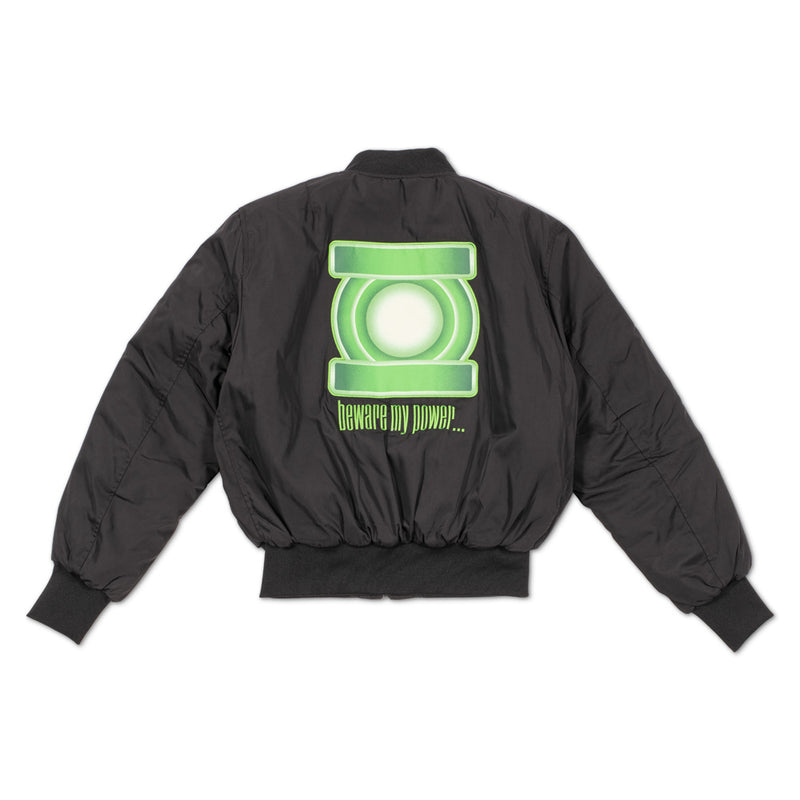
- FactThe emotional spectrum assigns rage (red), avarice (orange), fear (yellow), willpower (green), hope (blue), compassion (indigo) and love (violet) to seven Lantern Corps.Source: Wikipedia
- FactThe expanded spectrum and the Blackest Night storyline were developed by Geoff Johns during his Green Lantern run beginning in 2005.Source: DC
The Guardians of the Universe and the founding lie
The Guardians of Oa created the Green Lantern Corps and then spent billions of years lying about it, most famously by hiding the yellow impurity in the rings. Their explanation — that will cannot overcome fear directly — was a cover for something worse: they had imprisoned Parallax, the entity of fear, inside the Central Power Battery.
That single retcon fixed a decades-old plot problem and improved the character it touched. Hal Jordan's fall from grace, previously just a hero going bad, became possession by a cosmic parasite. Fans argued about it for years, but structurally it is one of the cleanest saves in comics.
The Guardians' emotional self-amputation is the thematic engine of the whole line. They removed feeling to be impartial and became monsters by degrees — culminating in their attempts to replace the Corps with emotionless drones.
- FactParallax was retroactively established as a cosmic fear entity imprisoned in the Central Power Battery on Oa, explaining both the rings' yellow impurity and Hal Jordan's turn to villainy.Source: Wikipedia
The entities: Ion, Parallax, Predator, Butcher and the rest
Each colour has a living embodiment. Ion is willpower, Parallax is fear, the Predator is love, the Butcher is rage, Ophidian is avarice, Adara is hope and Proselyte is compassion. They are not mascots; possession by one rewrites the host.
Their existence is what elevates the spectrum from a colour-coded gimmick to actual cosmology. Emotions in the DC universe are not psychological states — they are a form of energy with mass, direction and, at the extremes, agency.
That is also the setup for the biggest Green Lantern story of the modern era. If emotion is energy and life is emotion, then the absence of both is a power source too.
Black and white: death, life and Blackest Night
Blackest Night (2009) added black — the absence of emotion, wielded by Nekron and the Black Lantern Corps of reanimated dead heroes. Black rings feed on emotional response, which turns every reunion with a dead loved one into a trap.
Brightest Day followed with white, the Life Entity, as the counterweight. The two together closed the system: the spectrum runs from the total absence of life to its source, with the seven emotions strung between.
Blackest Night is the payoff to about five years of setup and it is the single best argument for the spectrum's existence. Every rule Johns established has a use in it.
- FactBlackest Night (2009–10) introduced the Black Lantern Corps under Nekron, with white light later established as the counterpart representing life.Source: Wikipedia
What the rings actually can't do
Ring constructs are limited by imagination, willpower and — critically — the bearer's understanding. A ring cannot build something the wearer cannot conceive of, which is why engineers and artists tend to be terrifying Lanterns and brawlers tend to make giant fists.
Charge is the other constraint. Modern rings are usually written with a practical 24-hour cycle requiring a power battery, and the tension of a draining ring is a staple of the books.
The old wood and yellow weaknesses have been written around so many times that they function more as historical trivia than active rules, but they explain a startling number of Silver Age plots.
Where the spectrum sits in DC's wider metaphysics
The emotional spectrum is one of several named energy systems in DC, alongside the Speed Force and, more recently, the Life and Death forces. Where Marvel's cosmology is a hierarchy of beings, DC's is a set of fields.
This is why crossover writing is easier in DC at the cosmic level: fields interact, and a story can plausibly plug a speedster into a ring or a Life Entity into a resurrection without renegotiating a chain of command.
It also gives the Green Lantern books a permanent structural advantage. Seven Corps means seven ideologies, and most of the best modern arcs are political rather than physical.
Where to start reading
Green Lantern: Rebirth, then Sinestro Corps War, then Blackest Night. That sequence is the entire modern mythos in order and it is one of the most satisfying long-form builds in mainstream comics.
If you want the emotional core rather than the cosmology, Green Lantern/Green Arrow by O'Neil and Adams is still the best-written Hal Jordan on the page — and it predates every rule above.
Sources
- [1] Wikipedia — Emotional Spectrum
- [2] DC — Green Lantern — official character hub
- [3] Wikipedia — Parallax (comics)
- [4] Wikipedia — Blackest Night