Invincible is the rare superhero comic that finished. It ran for 144 issues, told one continuous story with a beginning and an ending, and did it without reboots, line-wide crossovers or a status-quo reset.
That structure is why it lands. This is a spoiler-light look at what the series is doing, how it differs from The Boys, and where to start.
Where it came from
Invincible was created by writer Robert Kirkman with artists Cory Walker and Ryan Ottley, and published by Image Comics beginning in 2003. Image is a creator-owned publisher, which matters: the series could commit to permanent consequences because no licensing arm needed the characters kept marketable indefinitely.
Kirkman was writing The Walking Dead concurrently at the same publisher, and the two books share a method — long-form serialisation where the cast is genuinely at risk and the world does not snap back.
- FactInvincible was created by Robert Kirkman with Cory Walker and Ryan Ottley and published by Image Comics starting in 2003, running 144 issues.Source: Image Comics
The bait-and-switch premise
The opening reads as a warm, funny, slightly retro teen superhero book: a high-schooler whose father is Earth's most powerful hero comes into his own powers. The art is bright, the tone is light, the beats are familiar.
That familiarity is deliberate. The series spends its early issues teaching you the conventions of the genre so it can violate them, and the violation is not played for shock — it reframes everything that came before.
What it is actually about
Underneath the fights, Invincible is about inheritance: what a son owes a father, whether values are chosen or absorbed, and what someone with overwhelming power does with the ordinary parts of their life. The relationships get as much page time as the conflicts.
It also takes violence seriously. Fights have physical cost, bystanders exist, and injuries persist across arcs. That is the difference between deconstruction and cynicism — the book is not sneering at heroism, it is asking what heroism costs.
Invincible versus The Boys
Both are frequently described as “dark superhero” series and they are doing opposite things. The Boys is satire: supes are celebrities and corporate assets, and the target is the industry and the culture around it. Invincible is sincere: it believes in heroism and then stress-tests it.
If you want the genre attacked, read The Boys. If you want the genre taken seriously enough to hurt, read Invincible. Plenty of people want both, and they complement each other well.
Where to start and what to buy
Start at the beginning — issue #1, collected as Volume 1: Family Matters. There is no jumping-on point later because the series is one continuous arc, and skipping ahead spoils its best structural trick.
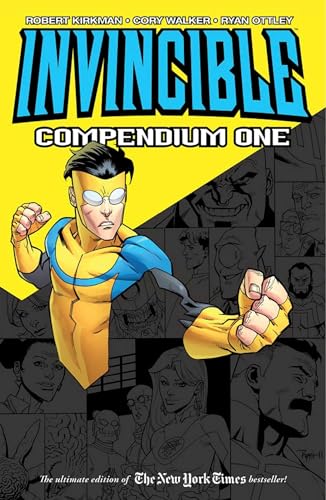
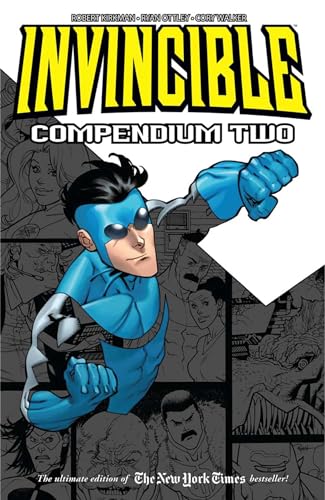
For collecting, the compendium editions are the efficient route: three oversized volumes cover the whole run at a much lower cost per page than individual trades. The Ultimate Collection hardcovers are the premium shelf option.
Sources
- [1] Image Comics — Invincible — Series Page
![Invincible Collection, Vols. 1-5 [Amazon.com Exclusive] — Robert Kirkman · 2006](https://images-na.ssl-images-amazon.com/images/P/1593964471.01._SCLZZZZZZZ_.jpg)