“Strongest Avenger” is one of the most-searched superhero questions and one of the least answerable, because the roster contains a god, a gamma-powered physical outlier, a magic user who edits reality, and an engineer whose power level is whatever he last built.
Rather than pretend there is a winner, this piece explains how Marvel handles power internally, why comparisons break, and how to have the argument in a way that actually goes somewhere.
Marvel had a stat system and quietly outgrew it
The Official Handbook of the Marvel Universe assigned characters numeric ratings across categories such as strength, speed, durability and intelligence. It is the closest thing to an official scale, and it is genuinely useful for rough tiers.
It is also not how stories are written. Handbook numbers are reference material compiled after the fact; a writer with a good scene will exceed them without hesitation, and editorial will publish it. Treating those stats as binding produces arguments that no comic supports.
Power is contextual by design
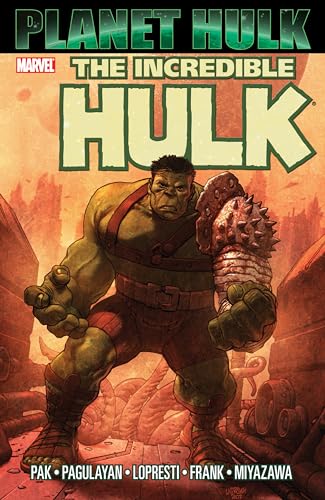
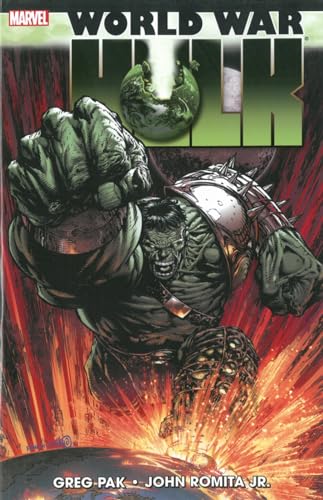
The Hulk's strength scales with anger, which means his ceiling is a narrative variable rather than a fixed number. Thor's output varies with equipment, state and story. Scarlet Witch has been written at wildly different levels depending on the arc. Captain Marvel's ceiling depends on which energy source a writer invokes.
None of this is sloppiness. Fixed power values make fights predictable and remove tension, so long-running shared universes deliberately keep the values soft.
Different questions, different answers
For raw physical strength with no cap, the Hulk is the standard answer, because the character is explicitly written as limitless-in-principle. For total destructive output and durability against cosmic threats, Thor is usually placed higher. For ability to change outcomes rather than win exchanges, reality-manipulators outrank both.
And for “who wins most fights against Avengers-level opponents,” the answer is usually preparation and counters, not raw output — which is why Iron Man and Captain America win encounters they should statistically lose.
Comics versus MCU
MCU rankings do not transfer to comics. Film versions are calibrated for their own stories and are usually far lower than their comics counterparts, particularly for Thor, Scarlet Witch and Captain Marvel.
Most online disagreements are two people using different canons. Establishing which continuity you are discussing resolves a surprising proportion of them before anyone mentions a feat.
How to argue power scaling well
Cite feats, not vibes, and specify the issue or film. Distinguish between a character's peak showing and their typical showing. Acknowledge that outlier feats exist and that writers contradict each other. And accept that the question has no resolution — the argument is the entertainment.
The people whose power-scaling takes are worth reading are the ones who say “in this run, under these conditions” instead of “X beats Y.”
Sources
- [1] Encyclopaedia Britannica — Marvel Comics | American Company