The Dark Phoenix Saga is the most adapted X-Men story ever, twice on film and repeatedly in animation, and almost every adaptation gets the central mechanic wrong. The Phoenix is not Jean Grey's power level increasing. It is a separate cosmic entity, and the question of how much of Jean is in it has been reversed at least three times.
This is the full accounting: the original story, the retcon that undid it, the retcon that undid the retcon, and what modern Marvel treats as canon.
The original story, as printed
The Dark Phoenix Saga ran in Uncanny X-Men #129–138 in 1980, written by Chris Claremont with art by John Byrne. Jean Grey, having become Phoenix, is manipulated into corruption, consumes a star, kills billions of inhabitants of a nearby world, and — restored to herself — commits suicide on the Moon rather than risk it happening again.
That ending was not the plan. Editorial insisted on it, on the grounds that a character who had committed genocide could not simply be forgiven, and the creators rewrote the conclusion late. The result is arguably the most emotionally serious ending in mainstream superhero comics.
Everything after is a negotiation with that ending, because Jean Grey is a commercially valuable character and a permanent death was never going to hold.

- FactThe Dark Phoenix Saga ran in Uncanny X-Men #129–138 (1980), by Chris Claremont and John Byrne, and ended with Jean Grey's death.Source: Wikipedia
The retcon: Jean was never Phoenix
In 1986's Fantastic Four #286, Marvel established that the Jean Grey who became Phoenix was not Jean at all. The real Jean had been placed in a healing cocoon at the bottom of Jamaica Bay, and the Phoenix Force had created a duplicate body to live her life.
This did two things: it resurrected Jean for the launch of X-Factor, and it absolved her of the genocide. Both were the point. It also created a permanent ambiguity that writers have exploited ever since — if the Phoenix copied her perfectly, was the copy her?
Claremont was not enthusiastic. The retcon is widely regarded as the moment the X-line's continuity became genuinely unmanageable, and it set the template for the resurrection culture that dominates the franchise.
- FactFantastic Four #286 (1986) retconned the Dark Phoenix Saga by revealing the real Jean Grey had been in a cocoon and the Phoenix had duplicated her, enabling her return in X-Factor.Source: Wikipedia
What the Phoenix Force actually is
Modern Marvel treats the Phoenix as a cosmic entity embodying life, passion and destruction — the force of creation that requires death to make room for new life. It is immortal, it predates most of the universe, and it seeks hosts rather than being summoned by them.
Its power tier is genuinely top-shelf: star-consuming, matter-manipulating, capable of resurrecting itself and its hosts. In power-scaling terms it sits with the abstract entities rather than with mutants.
Its hosts are the mechanism of the story. The Force amplifies whatever is already in a person, which is why it is repeatedly framed as choosing hosts with enormous emotional capacity — and why those hosts are the ones most likely to be destabilised by it.
- FactThe Phoenix Force is depicted as an immortal cosmic entity embodying creation and destruction, which bonds with hosts and amplifies their existing psyche.Source: Marvel
The other hosts
Jean is the famous one, but the Force has bonded with Rachel Summers, Cyclops, Emma Frost, Namor, Colossus and Magik during Avengers vs. X-Men, and with characters far outside the X-line. Each bonding is written as a different failure mode.
Avengers vs. X-Men (2012) is the most systematic exploration: the Force is split across five hosts, and the story is essentially a controlled experiment in how different personalities corrupt under identical amplification.
There has also been a Phoenix tournament — a story in which the Force holds an open contest for its next host — which is either brilliant or absurd depending on your tolerance for cosmic bureaucracy.
- FactIn Avengers vs. X-Men (2012) the Phoenix Force split among five X-Men — Cyclops, Emma Frost, Namor, Colossus and Magik — known as the Phoenix Five.Source: Wikipedia
Why the films keep missing
X-Men: The Last Stand (2006) recast the Phoenix as a repressed alternate personality created by Xavier's psychic blocks. Dark Phoenix (2019) restored the cosmic entity but compressed the corruption arc into a single film with no prior Phoenix presence.
Both stumble on the same thing: the comics story works because readers had followed Jean for years before the Force arrived, and because the ending is a genuine moral consequence rather than a spectacle. Adapting the plot without the tenure or the consequence leaves you with a woman who glows.
The 1990s animated series adaptation remains the closest to the source, largely because a multi-episode arc has room for the slow corruption the story requires.
Where the Phoenix sits now
The Krakoan era rebuilt the X-Men around resurrection as institutional policy, which changes the meaning of Phoenix death permanently — when the whole line can bring anyone back on a schedule, an entity defined by death and rebirth loses its monopoly.
The current framing leans harder on the Force as a judge of worthiness and less on the tragedy of a specific host. Whether that is an improvement is one of the genuinely open arguments in modern X-Men fandom.
How to read the whole thing
Read Uncanny X-Men #129–138 first, ideally in the Dark Phoenix Saga collection, then the Fantastic Four #286 retcon, then X-Factor #1. That sequence gives you the story and the machinery that undid it.
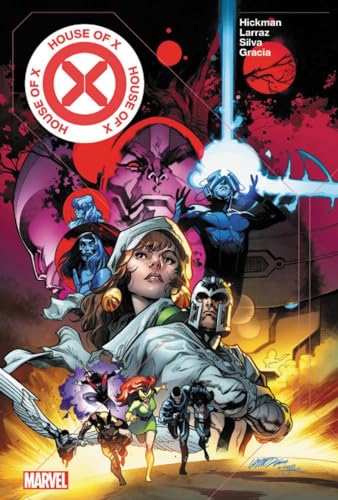
For the modern take, Avengers vs. X-Men and Jonathan Hickman's House of X / Powers of X are the two texts that matter most.
Sources
- [1] Wikipedia — The Dark Phoenix Saga
- [2] Wikipedia — Jean Grey
- [3] Marvel — Phoenix Force — official profile
- [4] Wikipedia — Avengers vs. X-Men